The Evolution of Paper Bags: From the Eastern Han Dynasty to the Green Cycle of the "Plastic Restriction Era"
1, Early Origins: Sprouts from the Eastern Han Dynasty to the Middle Ages (105-1850 AD)
The world's earliest traces of paper bags
In the Eastern Han Dynasty of China (105 AD): Cai Lun improved papermaking techniques and began using paper for packaging items. Archaeological discoveries have shown that hemp paper, which was used to package medicinal herbs during the Western Han Dynasty, was already available 113 years earlier than the "Cai Hou paper";
Tang Dynasty (618-907): Paper packaging technology improved, and the variety of dyed paper increased to more than ten types. Paper cups, paper utensils, and thick cardboard were used, and simple font names and patterns appeared on packaging paper;
Yuan Dynasty (1271-1368): The packaging paper unearthed from Yuanling, Hunan (before 1306) was confirmed to be the world's earliest paper packaging advertisement, with words such as "Tanzhou Shengping Fang" on it. It was used as promotional material for a paint and pigment shop in Changsha;
Early Europe: Paper bags became popular in the Mediterranean region in the 13th century; In the 18th century, it became a common packaging method used by European merchants, mainly for food and daily necessities;
2, Industrial Revolution: A Qualitative Change in Paper Bag Manufacturing (1852-1920)
Key breakthrough in paper bag manufacturing
In 1852, American botanist/teacher Francis Wolle invented the first paper bag making machine, obtained a patent, and established the Union Paper Bag Company, which could mass produce envelope shaped paper bags. This was a milestone in the history of packaging and marked the transition of paper bags from manual labor to industrialization;
In 1871, Margaret E. Knight, known as the "Queen of Paper Bags," invented the square bottomed paper bag making machine, completely changing the practicality of paper bags. Her machine can cut the two ends of a paper tube into four petals, fold them into diamonds, and bond them together to form a flat bottom, allowing the paper bag to stand upright and carry more items. This design is still in use today;
In 1883, Charles Stilwell improved on the Knight patent and invented a self opening square bottom paper bag machine with folded edges, making paper bags easier to fold and store, further enhancing practicality;
In 1908, the first modern shopping kraft paper bag was born in St. Paul, Minnesota, USA, invented by Walter Deubner. Four years later (1912), he added a handle design and named it the "Deubner shopping bag". By 1915, the annual sales exceeded one million;
3, Global Popularization and Diversified Development (1920-1970)
a. Material and technological innovation
At the beginning of the 20th century, German chemists developed kraft paper, which became the mainstream packaging material due to its high strength and good toughness, marking a significant progress in the paper bag industry
In the mid-20th century, with the breakthrough of chemical fiber technology, the application of synthetic pulp made paper bag materials more diversified and production efficiency greatly improved;
During World War II, paper bags played an important role in military material packaging, further promoting technological improvements and capacity expansion;
b. Market application expansion
Food industry: Packaging for bread, fruits, vegetables, and meat has become a standard in supermarkets. Daily necessities such as clothing, shoes, hats, cosmetics, etc. are widely used in the retail industry. In the industrial field, packaging for small parts and tools replaces some wooden boxes and bags;
In 1950, the global production of printed paper bags was only a few hundred thousand tons, but by 1970 it had exceeded 10 million tons, showing astonishing growth;
4, Plastic impact and industry downturn (1970-2000)
In the late 1970s, plastic bags entered the market on a large scale, quickly seizing the market with the advantages of being thinner, stronger, and cheaper, and competing fiercely with paper bags. By the early 1980s, the market value of shopping bags had reached $600 million, and paper bags gradually lost their dominant position;
1980-2000:
The annual growth rate of plastic bags is over 15%, while that of paper bags is only 2-3%;
Supermarkets, convenience stores, and other retail industries have shifted their focus to plastic bags on a large scale;
The paper bag market is shrinking and the industry is forced to transform, mainly focusing on specific fields such as high-end gift packaging and food baking;
5, Environmental awakening and paper bag revival (2000 present)
a. Policy driven revival
In 2008, China implemented the "Plastic Restriction Order" to restrict the use of ultra-thin plastic bags, injecting new energy into the paper bag market;
After 2015, the global trend of "plastic bans" emerged, and countries such as the European Union, the United States, Canada, and Australia successively legislated to restrict disposable plastic products. Paper bags, as the most mature alternative, ushered in an explosive period;
b. Technological and material innovation
Intelligent production:
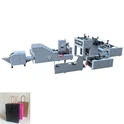
Modern paper bag machines achieve full process automation from roll paper to finished products, including printing, die-cutting, tube forming, sealing, folding, threading, etc., with an efficiency of 12000 bags/hour, which is 70% higher than semi-automatic machines;
The AI visual inspection system achieves a defect recognition rate of 99.5%, significantly improving product quality;
Material diversification:
Environmentally friendly materials: FSC certified 100% recycled paper, bamboo pulp paper, straw fiber paper and other sustainable materials are widely used
Biodegradable materials: corn starch based biofilm (thickness 0.02mm, load-bearing capacity 13kg), PLA/PBAT composite film, etc., meet the EU EN13432 standard, promote paper bags to move towards "zero carbon cycle";
Innovative bag type:
Waiveless paper bag: eliminates traditional side seams, increases material utilization by 12%, enhances load-bearing capacity by 20%, and reduces manual labor by 50%;
Double pack paper bags: One device can produce two large-sized paper bags simultaneously, reducing costs by 40% and shortening the changeover time to 30 minutes;
Multi functional handheld system: compatible with 7 types of handles such as round rope and flat rope, reducing equipment investment by 60% and shortening switching time to 5 minutes;
6, Current situation of modern paper bag industry (2025)
Market size and pattern
Global market:
The scale is expected to reach 534-1356 million US dollars in 2024, and is expected to increase to 681-21.03 billion US dollars in 2031, with a compound annual growth rate of 3.6% -6.9%;
Chinese market:
The market size of fully automatic paper bag machines will reach 4.86 billion yuan in 2024, a year-on-year increase of 6.3%, and is expected to reach 5.17 billion yuan in 2025, with a growth rate of 6.4%;
The market size of the printing paper bag industry has reached 85 billion yuan, a year-on-year increase of 8.2%. However, the number of enterprises has decreased from 12000 in 2020 to 9800 in 2024, and the industry concentration has increased. The market share of the top 20 leading enterprises has increased from 35% to 48%;
Market pattern:
European high-end camp (35%): focusing on the high-end markets of pharmaceuticals and luxury goods;
Japanese precision camp (25%): renowned for durability, with over 10000 hours of trouble free operation;
Chinese innovation camp (40%): With cost-effectiveness and intelligence, it has risen rapidly, with an export growth rate of over 25% and a market share of over 60% in Southeast Asia;
7, Future trend: "Smart green dual wheel" drive
a. Intelligent upgrade:
AI will be fully integrated into the production process, and by 2027, the proportion of intelligent devices will reach 70%. Predictive maintenance will be popularized, and the response time for equipment failure warning will be reduced to within 15 minutes;
The application of digital twin technology has been expanded, and enterprises such as Nanjing Zhuoneng have achieved a breakthrough in reducing the debugging cycle from several months to one week and reducing energy consumption by 37.7%;
b. Green and sustainable:
The market share of energy-saving equipment is expected to reach 70% by 2025 and 100% by 2030, with unit energy consumption reduced to 0.25 kWh per thousand units
The demand for specialized models for biodegradable materials is increasing by over 25% annually. Companies such as Kangshou have obtained EU EN13432 certification, and their products can be completely degraded in natural environments;
c. Expansion of application areas:
Medical and health (growth of 8.5%): demand for sterile packaging and pharmaceutical paper bags has surged;
Electronic products: the market for anti-static paper bags and cushioning packaging is expanding;
Automotive parts: replace plastic turnover boxes, environmentally friendly and biodegradable;
E-commerce logistics: The explosive growth of 40 million orders per day has become a new engine, leading to a significant increase in demand for customized paper bags;
The cycle and rebirth of paper bags
From the papermaking industry of Cailun in the Eastern Han Dynasty to modern intelligent factories, from handmade production to AI driven full automation, packaging paper bags have undergone a magnificent transformation from practical tools to environmental symbols. Under the trend of plastic restrictions and sustainable development, this packaging form with a history of two thousand years is experiencing an unprecedented revival. In the future, the paper bag industry will continue to follow the dual wheel drive of "intelligent improvement of efficiency and green protection of the earth", playing a more important role in the global action of "replacing plastic with paper", and writing a green legend belonging to this era.
Note: Some data is sourced from industry reports and the latest product information released by enterprises from January to October 2025. The market size may vary due to different statistical approaches.